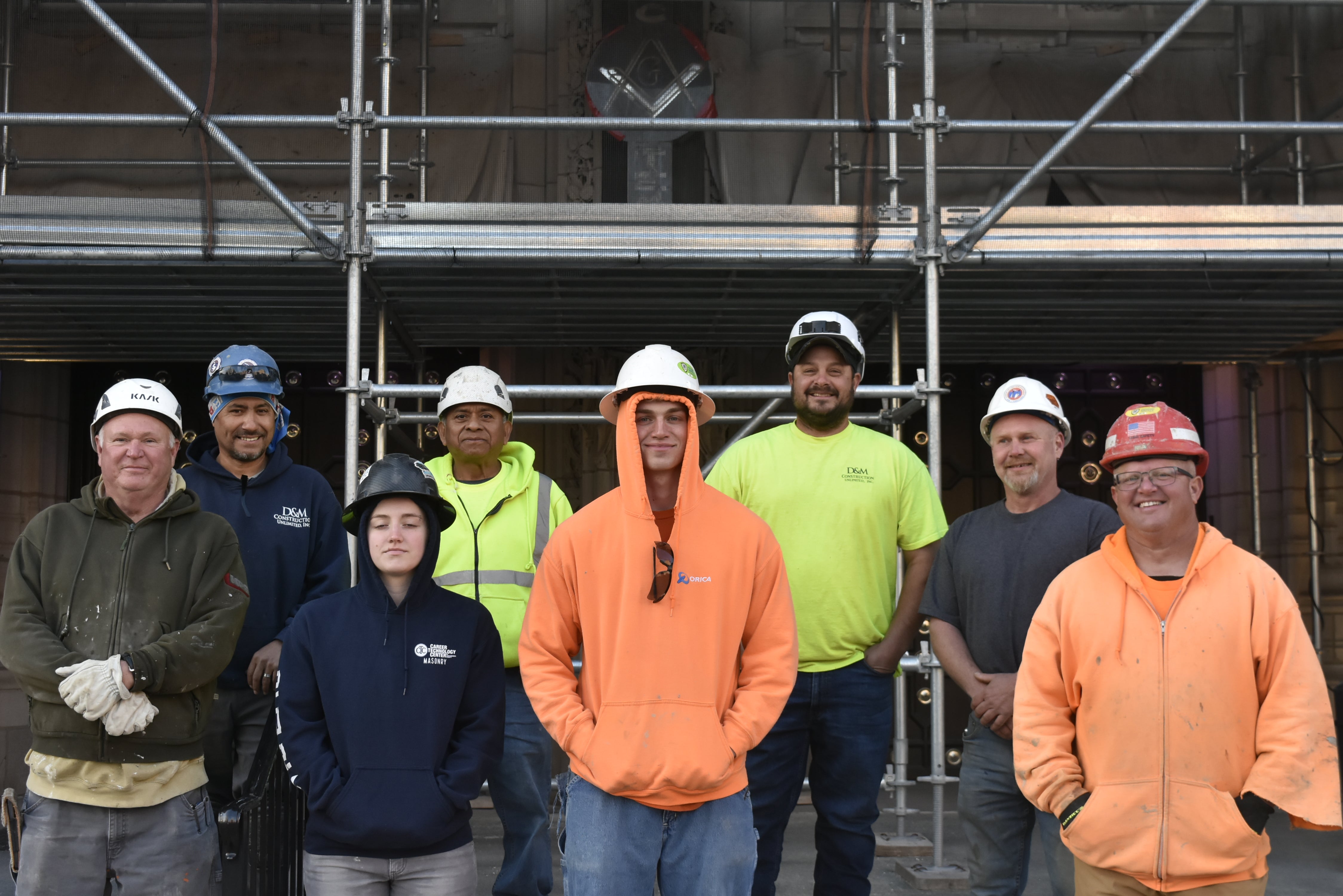

IMI/IMTEF Support Local 5 PA Craftworkers in Enhancing Skills Needed to Work on Historic Theater
BAC Local 5 Pennsylvania craftworkers got the rare opportunity to restore one of the most important historic buildings in northeast Pennsylvania: The Scranton Cultural Center.
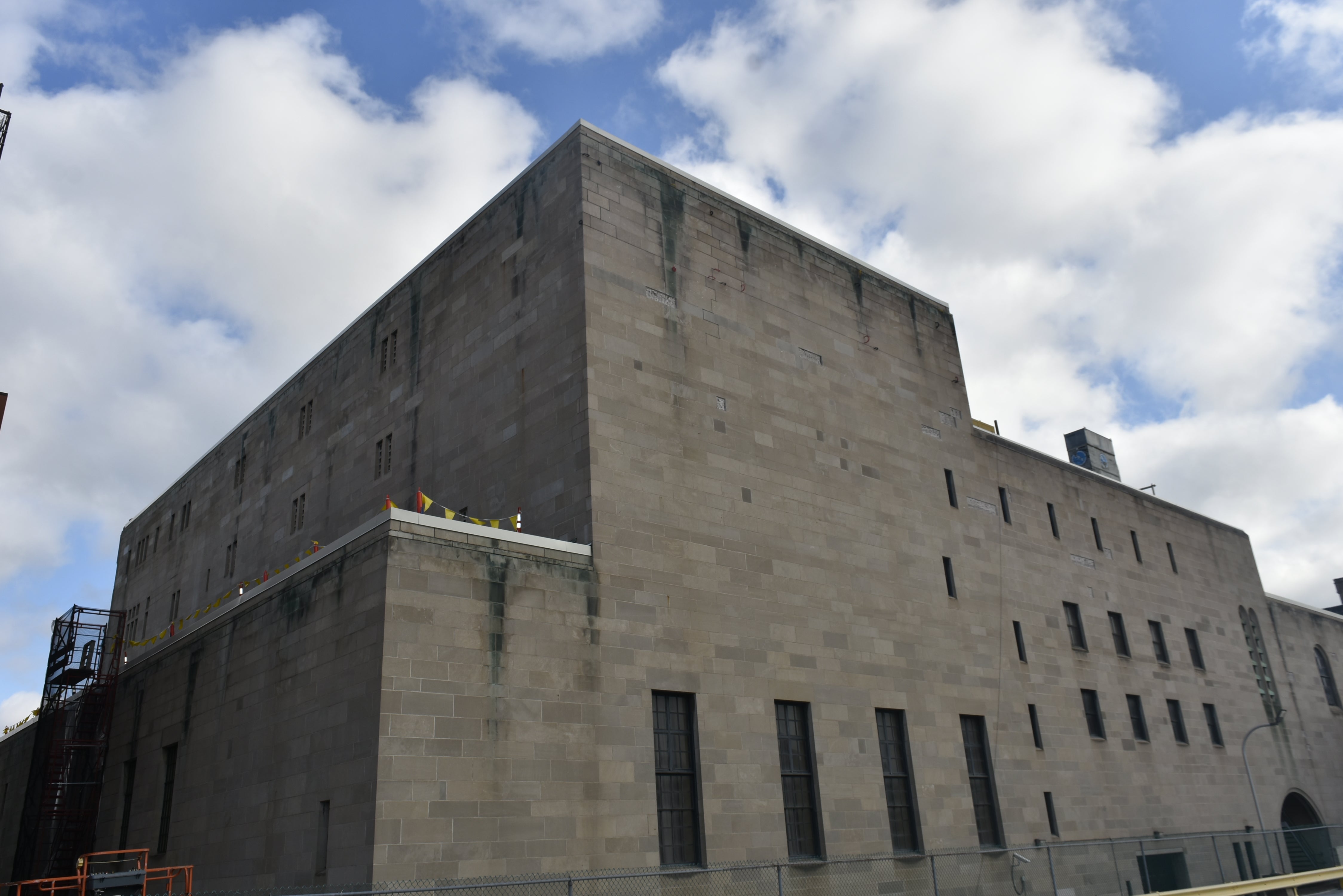 The center, which opened in 1930, was originally a Masonic Temple and Scottish Rite Cathedral. Now a beloved local event space and National Historic Landmark, it has previously undergone several interior restorations. But this is its first comprehensive exterior restoration, including roof and gutter replacement and extensive masonry restoration.
“This project is special because it’s unique in the Scranton area to have what we call a transitional wall type construction, where they're transitioning from mass masonry to a cavity wall,” explained Casey Weisdock, Director of Industry Development and Technical Services with the International Masonry Institute (IMI).
The project bid required the masonry contractor for the project to have craftworkers trained through IMI’s Historic Masonry Preservation Certificate (HMPC) program – increasing the likelihood that a BAC signatory contractor would win the work.
Contractor D&M Masonry was awarded the project, and craftworkers took HMPC training in the winter of 2025 at the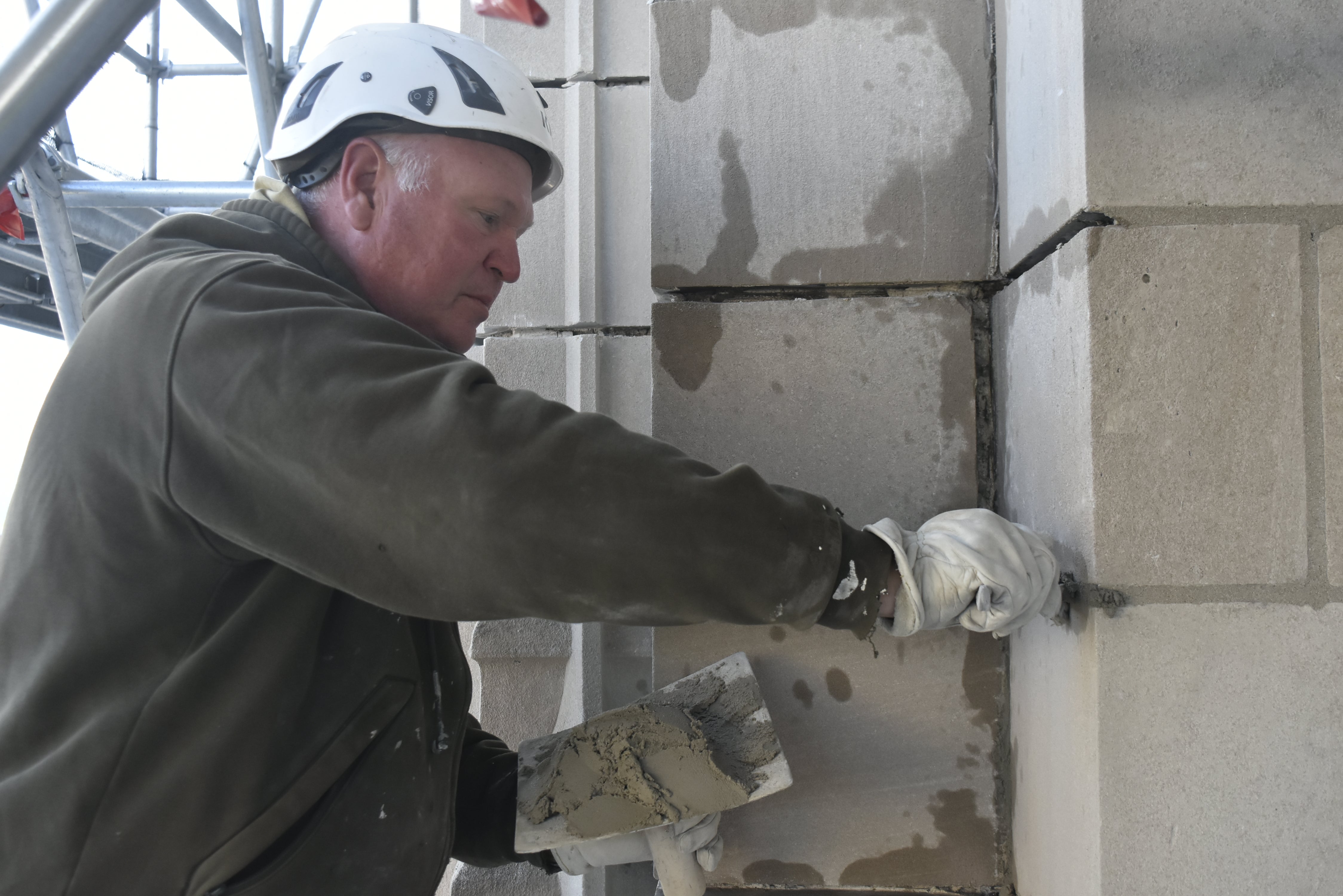 John J. Flynn BAC/IMI International Training Center to enhance the skills they needed to restore the iconic building.
“Everyone who went learned something,” said Joe Genovese, Business Agent with Local 5 PA, adding he’s always happy to see the HMPC language added into project specs. “It keeps our members working, and it’s making sure our projects are being done by qualified, certified bricklayers.”
Once the job was underway, Weisdock worked with the masons to troubleshoot mortar colors to make sure they matched the selected samples. She also reviewed the installation of the Impressed Current Cathodic Protection (ICCP) system, a complex technology designed to prevent rusting.
 “There was a short period of time in history where buildings were built with structural steel and load-bearing masonry,” she said. “So, they’re in direct contact with each other, and when water gets into the wall and to the structural steel, it starts to rust-jack and damage the masonry around it.”
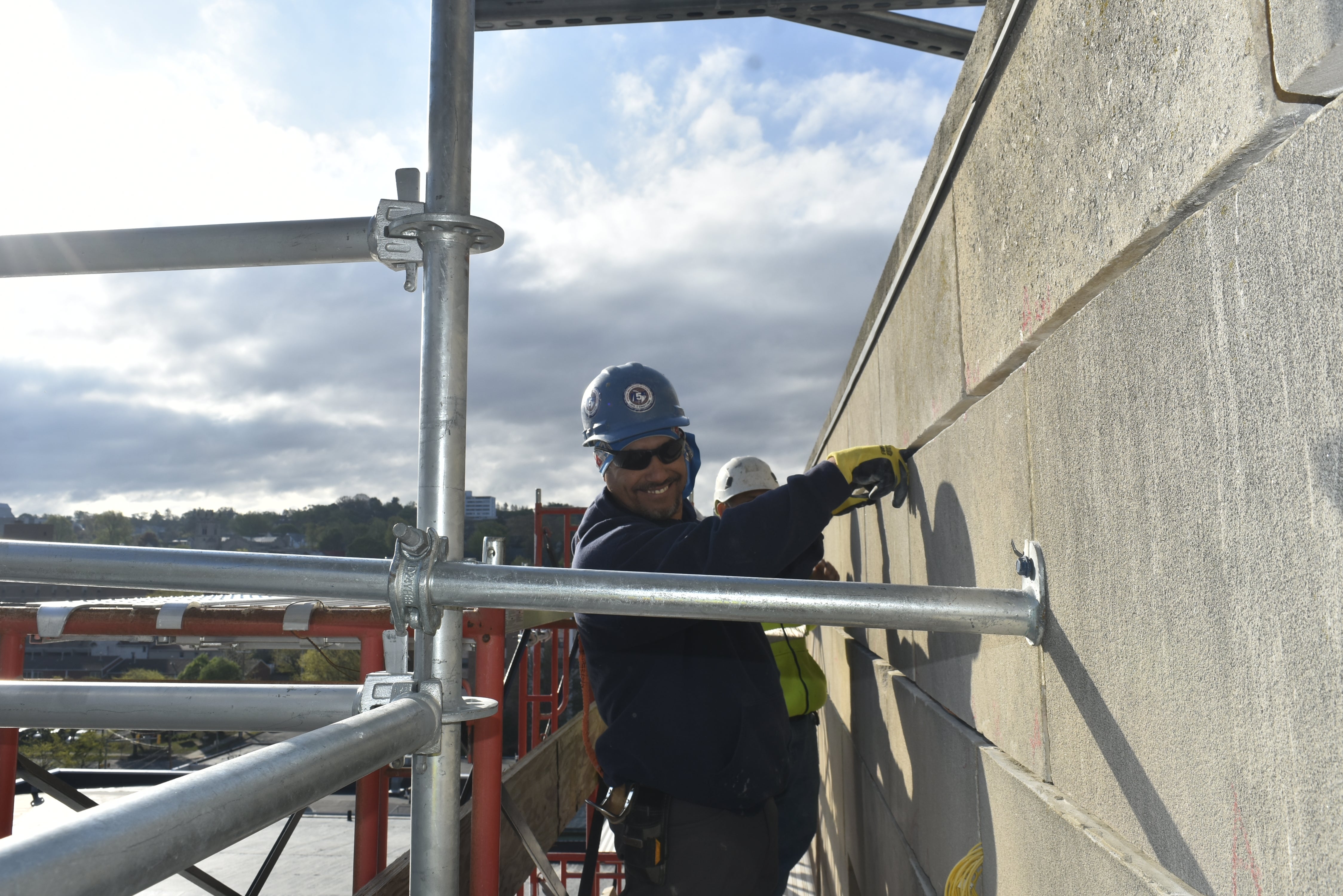
When installing the cathodic protection system, masons are required to cut out the mortar joints much deeper than is typical to feed the necessary electrical wires to the steel, which in this project was as deep as 14 inches. Then electricians hook the wires up to an electrical source. “This is specialized masonry restoration work that BAC contractors are increasingly asked to perform, and it’s good to see our ability to claim it jurisdictionally,” Weisdock said.
Jason Genovese, superintendent with D&M and Joe Genovese’s brother, said he’s only installed cathodic protection once before in his 25 years working as a PCC craftworker. “So that was a cool experience,” he said. “The (HMPC) instructors were great. I called Casey two or three times to just pick her brain, and she was always willing to answer any questions we had.”
Local 5 PA member Milton Ortega, a PCC specialist, said the training taught him a lot, particularly about JAHN patching and how to pressure wash limestone.“I had never taken a class on how to pressure wash limestone and do it the proper way so you don’t damage it, so that was important to learn because this is all limestone,” Ortega said. “Being part of the project has been amazing. It’s a beautiful old building.”