Banking on BAC Skill to Restore Two Philly Landmarks
 Washington may have served as the capital of the United States for well over 200 years, but Philadelphia can proudly claim its place as the original home of American independence and democracy. It was there that the Continental Congress ratified the Declaration of Independence in 1776, and it was there that the US Constitution was crafted and finally adopted by delegates to the Constitutional Convention.
Philadelphia is also home to two early masonry landmarks that recently received restorations in preparation for the nation’s 250th birthday – the First and Second Banks of the United States. Both banks, predecessors of today’s Federal Reserve, were chartered by Congress to regulate government debt and handle fiscal transactions for the new republic. 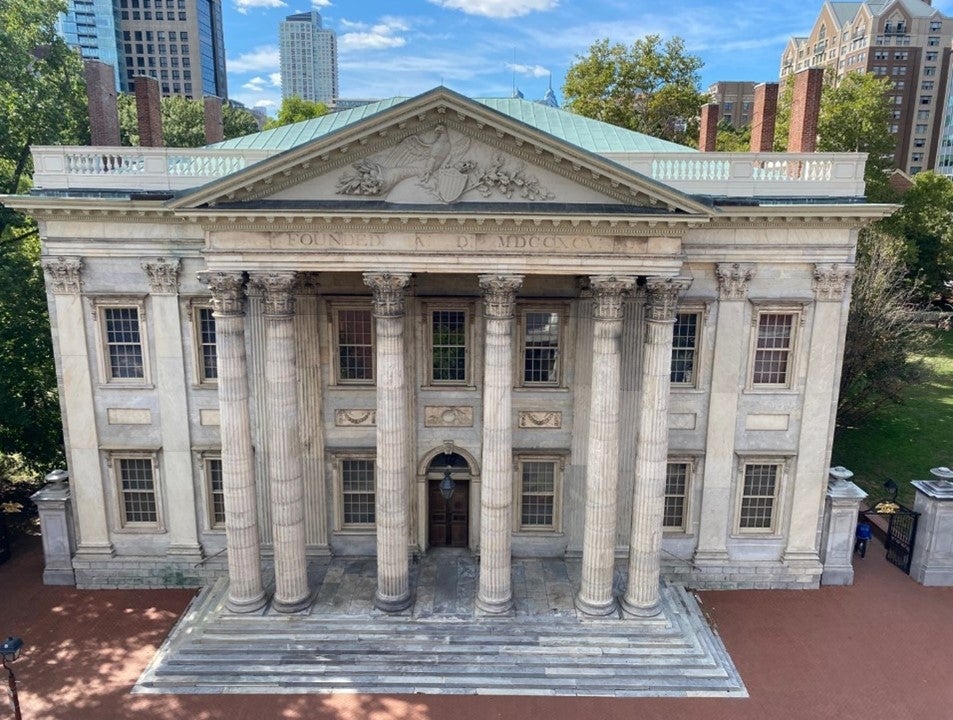
Designed by James Hoban – the architect responsible for the White House – the First Bank of the United States headquarters was built in 1797 in the Greek Revival style. Over the centuries, its graceful marble columns and façade had naturally deteriorated in the challenging four-season Philadelphia climate, so in 2023, the National Park Service – the current owner of the building – began a $24 million restoration. Longtime BAC Local 1 Pennsylvania/Delaware signatory contractor Dan Lepore and Sons got to work with a team of experienced Local 1 masons.
 “You know, Alexander Hamilton built the place, so we put a lot of effort into it. It was challenging, but it was rewarding,” remembered Local 1 bricklayer Joe Masters, who both estimated the job for Lepore and worked on it in the field. The project encompassed restoration of both the building’s original brick and marble facades, as well as new construction on an addition, drawing on all the Philadelphia masons’ skills. “We had dutchmen on the job, patching, caulking, new brick work, new stone work, there was even an elevator shaft we built with CMU. If it was in our trade – restoration or new work, you name it – it was on that job,” said Masters.
“Just to be on a project with so much history – a building with the Founding Fathers’ names on it – it was really a special job for us,” Masters said. Echoing that sentiment was Local 1 PCC member Pat Quinn: “It’s not like it’s some random building – it’s got a lot of history in it, over 230 years. It’s awesome, working a job like that. You’ll think about it for years.”
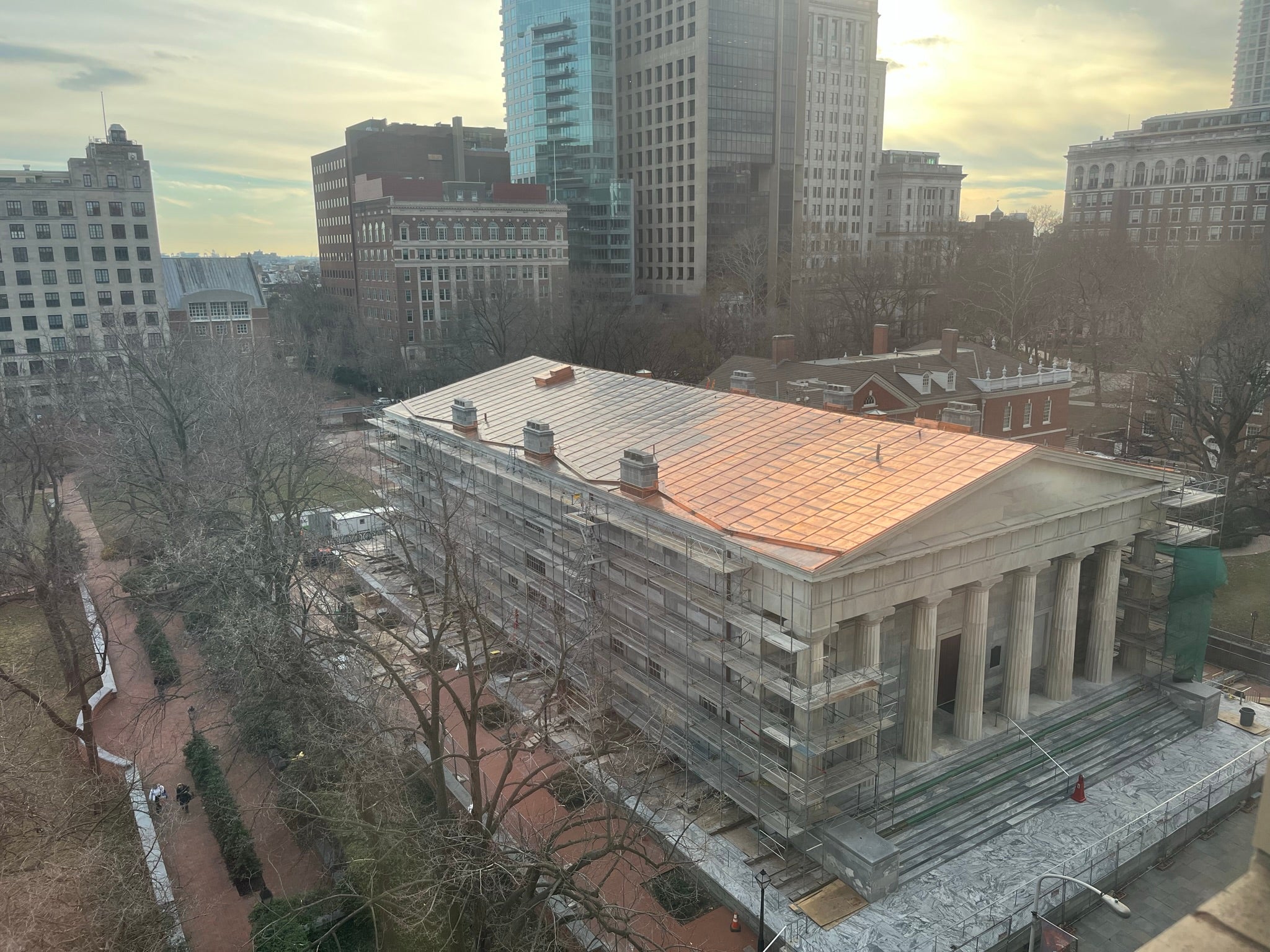
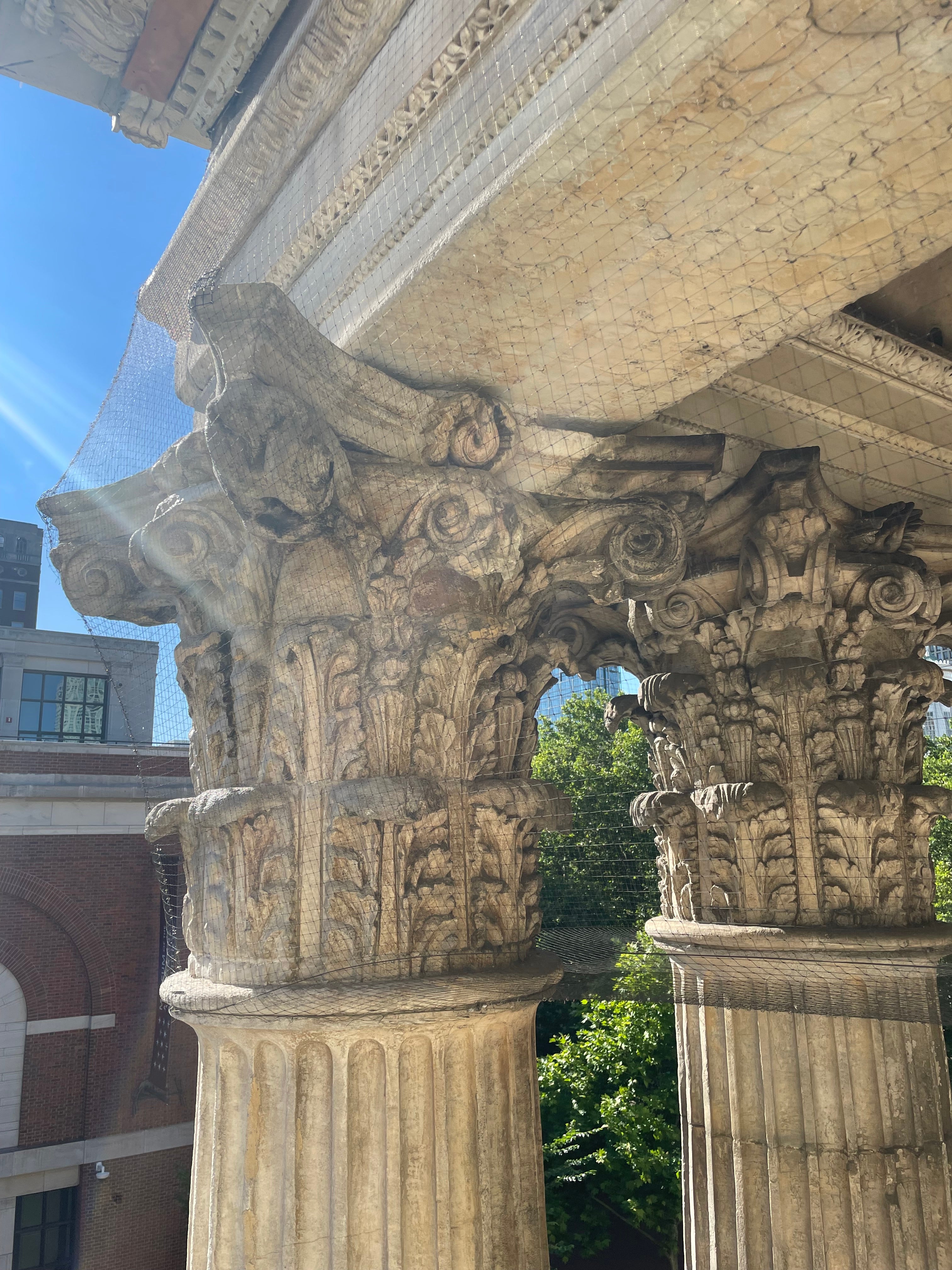
Just 21 years after the First Bank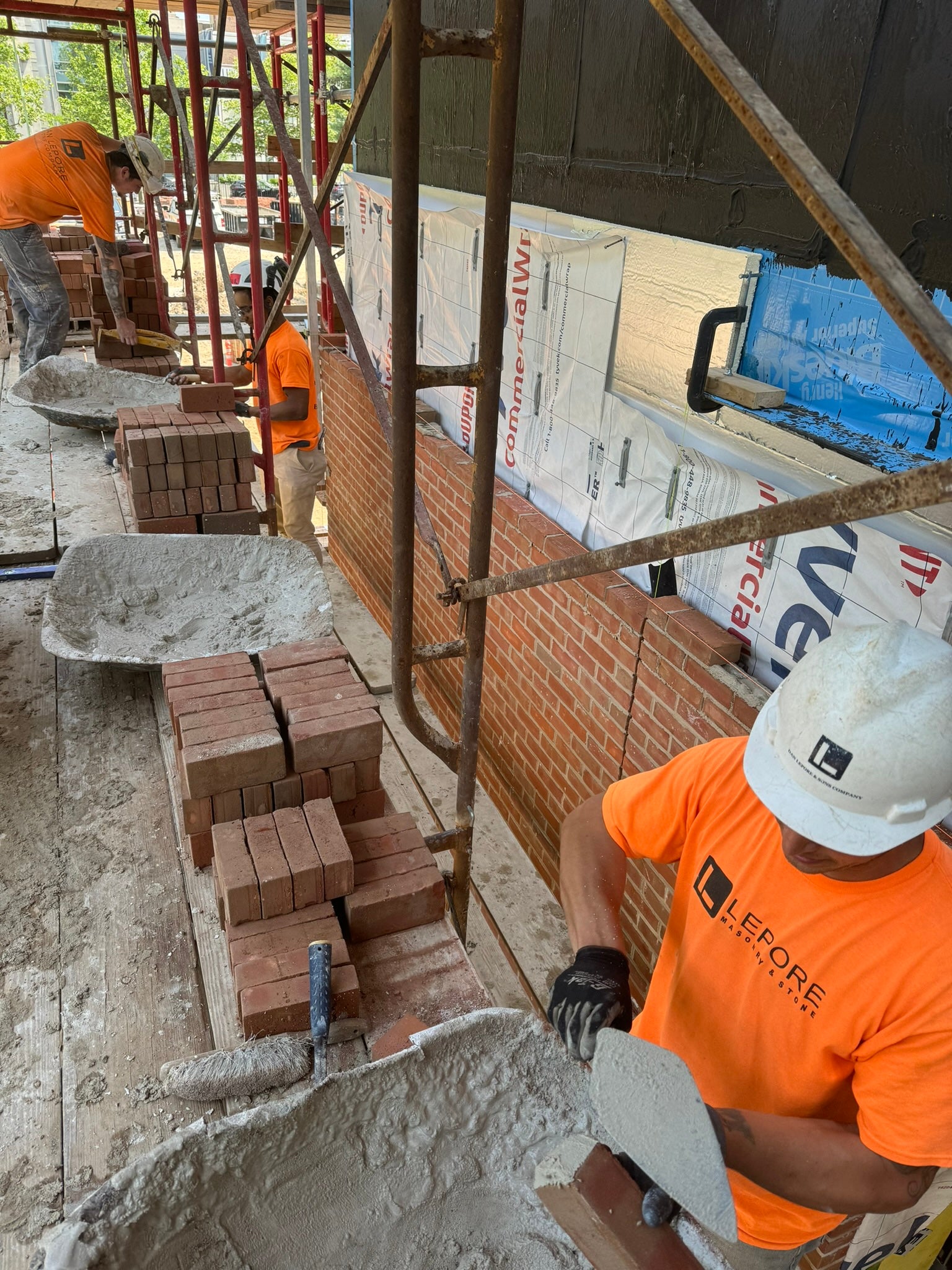 was completed, Congress authorized the formation of the Second Bank of the United States, and provided for its construction just a block away from its predecessor. Like the First Bank, the Second Bank was designed in the Greek Revival architectural style, and mimics the Parthenon in many aspects. Its iconic Doric columns were badly weathered when Stone & Lime Historic Restoration Services, an IU agreement signatory contractor based in Massachusetts, won the bid to restore the National Historic Landmark in 2023.
The project, which took a bit over a year to complete, saw the crew of eight masons clean deep copper stains and repair, repoint, and patch the marble exterior. As Local 1 Pennsylvania/Delaware member Bri Castelli said, “the columns on the north and south exposures were tricky since they were carved from a softer marble than the rest of the building, so we spent a lot of time working patiently on those. We had to take a versatile approach to repair the damage, using everything from grout injections to dutchmen to patching and even bone screws.”
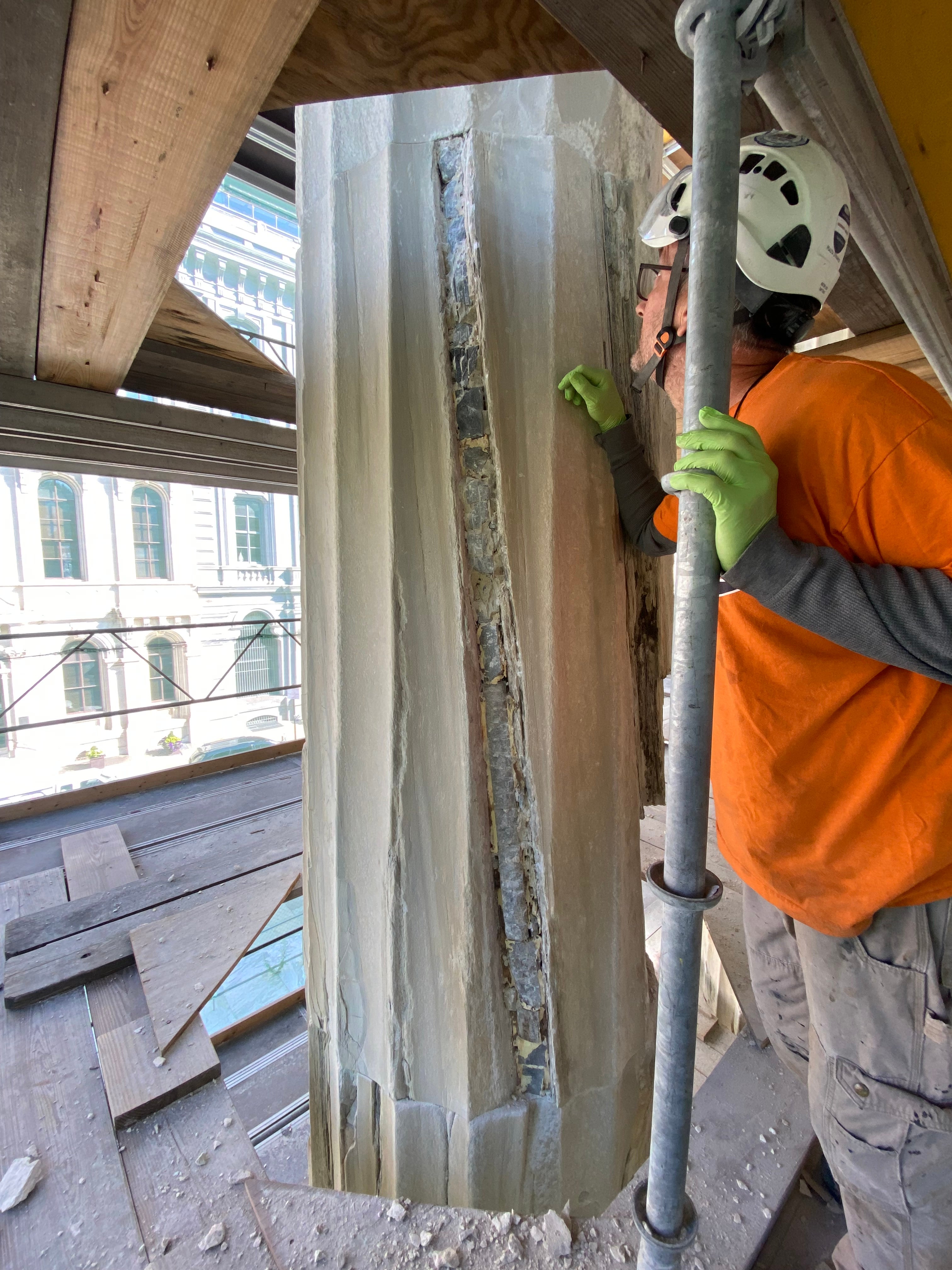 Restoring a national landmark sometimes requires going above and beyond, Castelli recalled. “We had to salvage old stair treads from a local architectural salvage yard so we could match the King of Prussia marble, which hasn’t been quarried since the 1800s. Working with the KOP marble on some used stair treads was a lesson in patience for sure, since there were so many defects from being salted and worn.”
While there were undoubtedly differences between the two bank jobs, the masons who worked on them were united by their respect for the history that they were charged with preserving. As Local 1 member Wayne Donato said, “all of us have a strong passion for our projects, regardless of whether if it’s a gas station or a monumental structure. But that feeling was elevated when we walked onto the site of the First Bank. We were hit with a tremendous responsibility to preserve this historical building for generations to come.” Likewise, Castelli concluded, “in the end, it was truly a special job – almost every day we got to pass through Independence Hall on our way to get coffee. Not only a cool building, but a great job, and most importantly I was able to work with and learn from all my union brothers.”