Pittsburgh Airport Makes a Comeback Thanks to BAC
 Pittsburgh International Airport is ready for a comeback – and for over two years, dozens of BAC members spent thousands of hours making that possible.
After US Airways stopped using it as a hub in 2005, the airport had fallen on hard times. Because it was designed as a transfer point rather than as a starting point for travel, it now had tens of thousands of square feet of unused space, and wasn't as inviting or efficient as other contemporary airports. But twenty years later, the airport is moving into a new era. A new entrance and exit terminal, designed for efficient, low-stress travel, opened in November 2025.
"This airport modernization is expected to boost the local economy by billions of dollars, increasing tourism and convention business," said Local 9 Executive Vice President Bill Greer. "From precast to tile to terrazzo, the skilled work of BAC members is an essential part of reviving the Pittsburgh airport as a gateway to the region."
Crafting Floors for Flight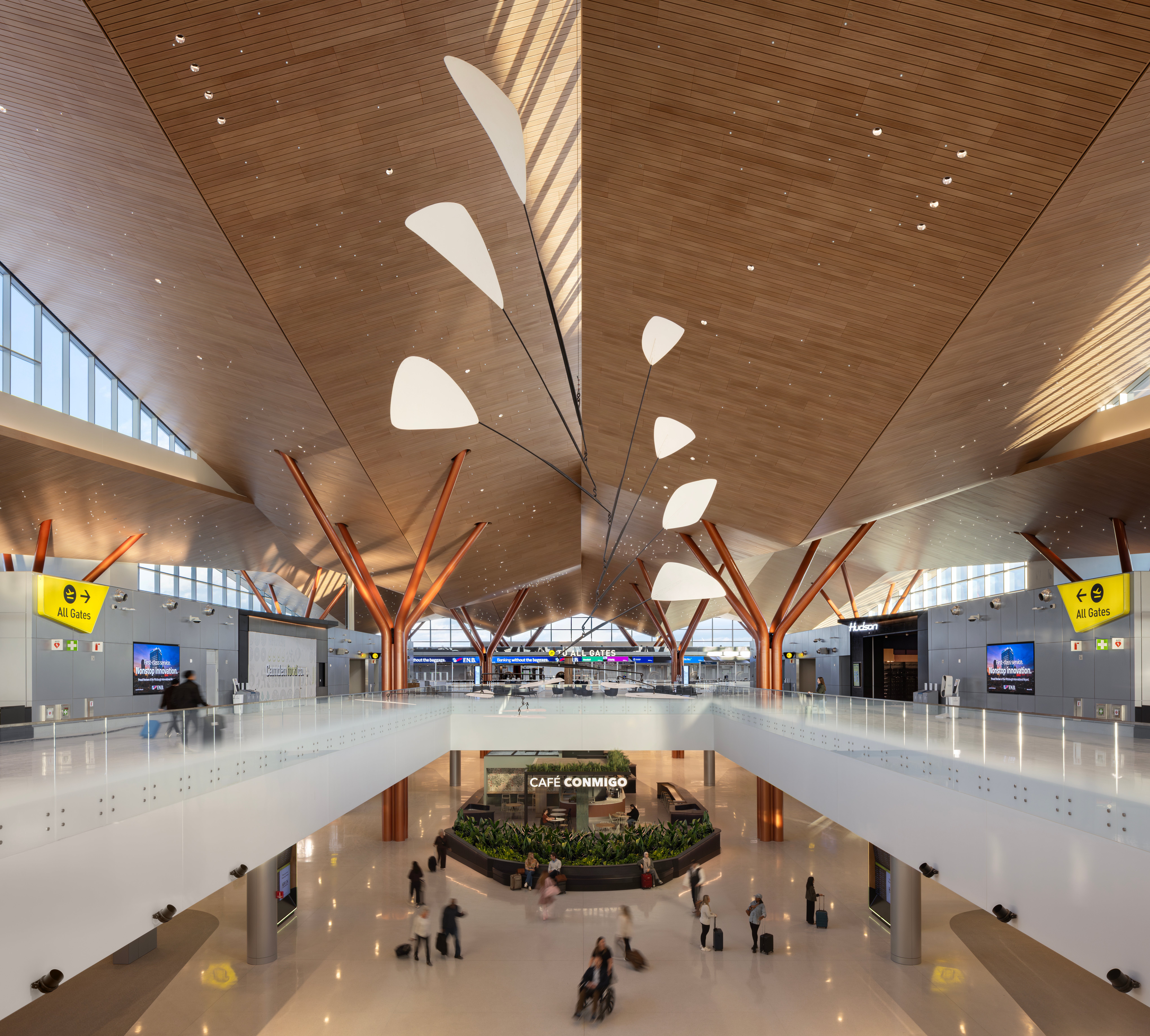
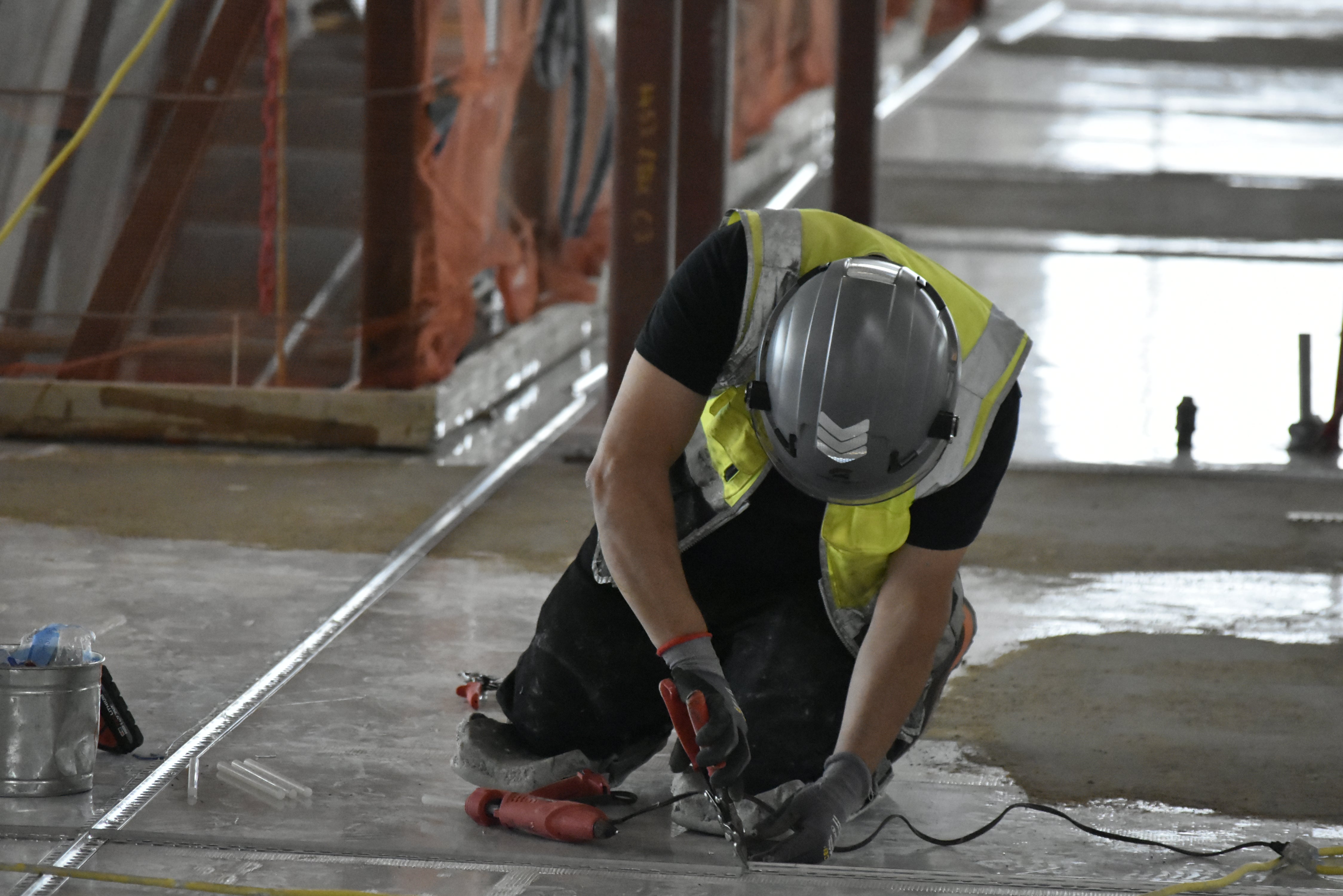
BAC signatory Roman Mosaic and Tile Company was a key contractor in the impressive, long-running project – one that was rewarding to the members who worked on it, but which also featured some unique challenges. Before the last phase – scheduled to start after Pittsburgh hosts the NFL Draft in April – 50,948 work hours had already been spent on the terrazzo floors alone.
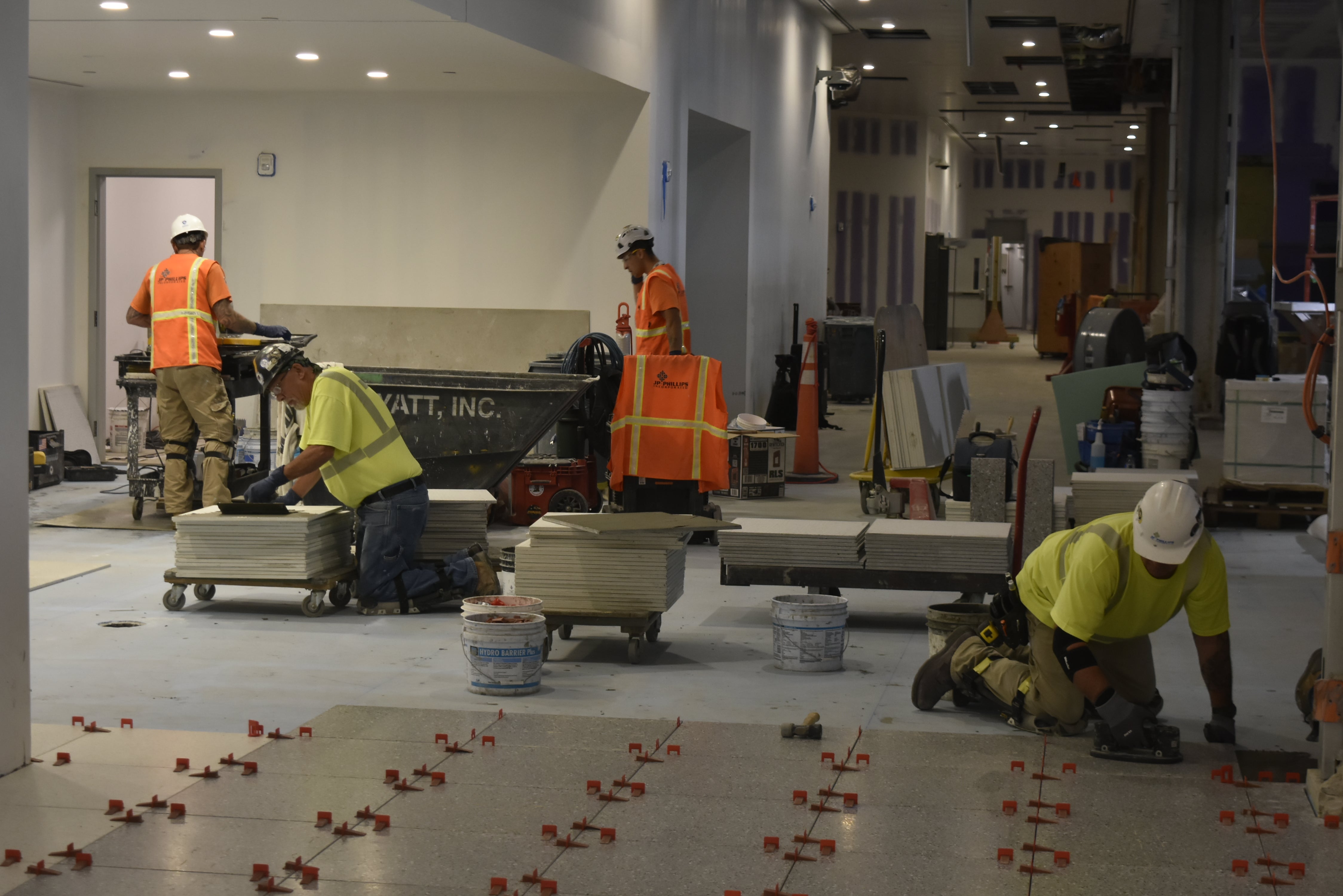
The terrazzo in the main concourse was by itself a major undertaking, with up to 35 workers at a time racing to finish the 197,000 square feet of flooring. "For almost the whole of 2025, we were working seven days a week to get the project done," Local 9 PA member Josh Kazar, the foreman and superintendent for Roman Mosaic said. Kazar himself worked at the airport for two years.
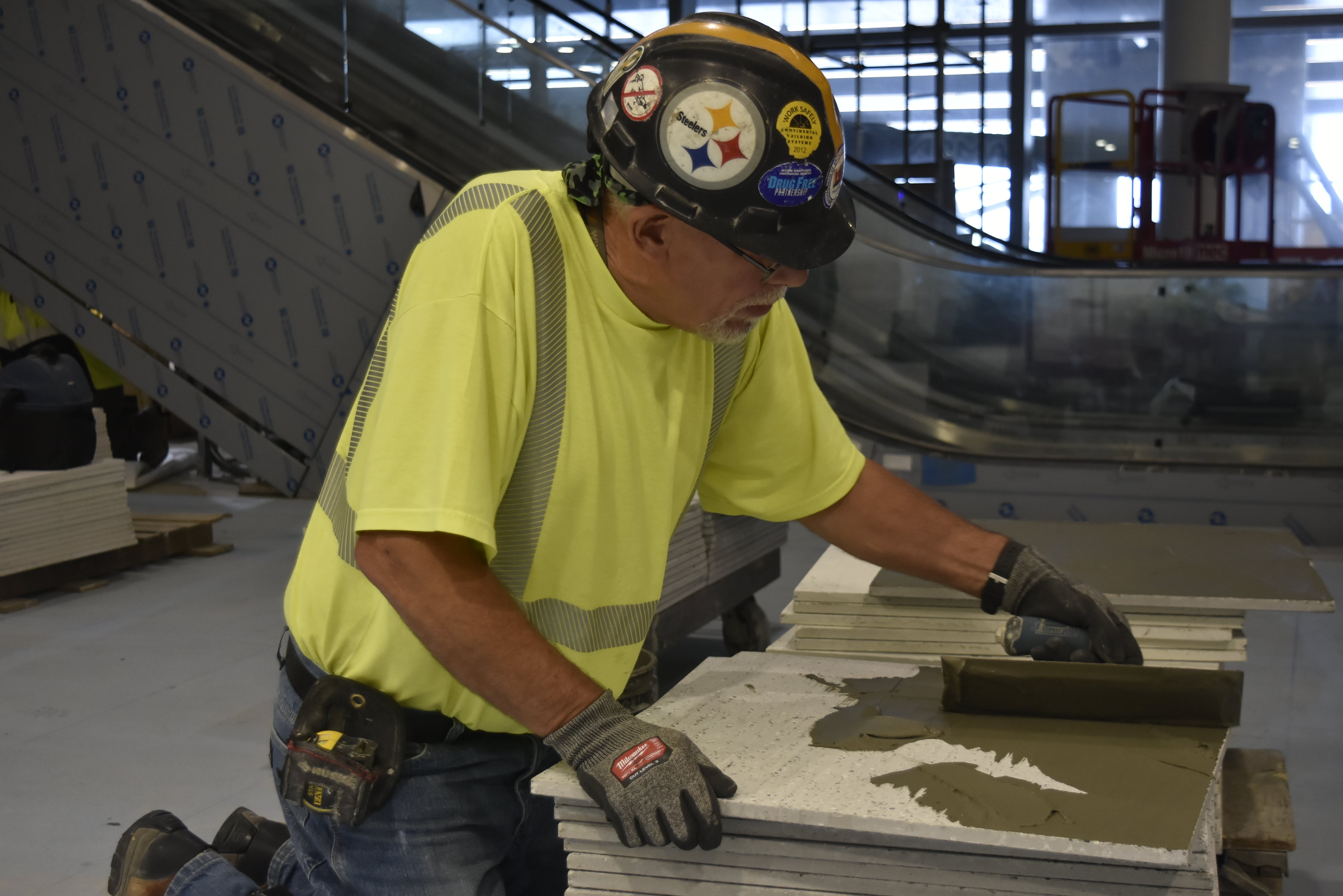 One of the largest challenges for the BAC terrazzo teams was matching the new terrazzo to the existing flooring where the old and new concourses met up. “We had to continue the existing pattern in the floor,” Kazar explained. “That was time-consuming." To do that, the crew used laser-jetted four-by-eight templates, which were laid out "like a puzzle."
The results are impressive. "Through the floor it's multiple colors. Our divider strips divide the color evenly, so they don't mix together, and it also creates the pattern,” Kazar continued.
The size of the job and the number of trades and contractors involved meant serious logistical challenges. Kazar explained, "we were coordinating with the ceiling work being done at the same time. There was either scaffolding being built ahead of us from floor to ceiling or they were pushing to start building it behind us." 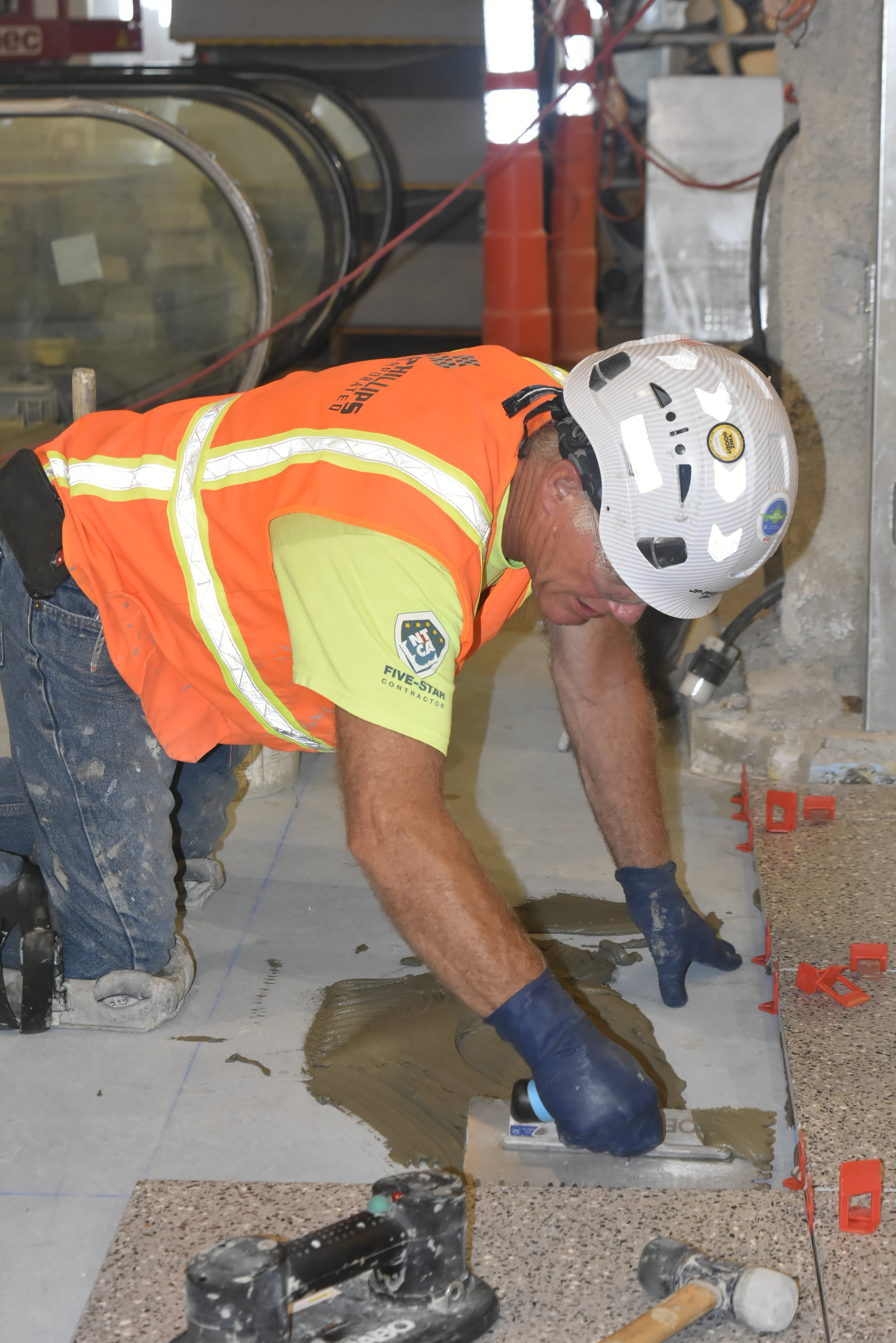
But the results were rewarding. It was an opportunity for terrazzo workers to make a major statement about the impact their work can have.
"It's cool to be a part of something that not only most of the people in your area know about, but that people throughout the country will see," Kazar said. "My trade, we're few and far between as far as the workers that know how to do it. There's not many people that know how to do terrazzo, and our crew was pulled from all around the country to come here and do work."
“The union was a big help, calling other locals from all over the country to get guys together,” Mike Trevisan, President of Roman Mosaic and Tile said. Pittsburgh is a new market for the company, and after winning the airport project, they also picked up multiple other large jobs in the area. “The confluence of all the jobs, they rammed together. So, what we weren’t anticipating was not only having the Airport job going, but five others at the same time.”
“It was an interesting hodgepodge of our local Pittsburgh guys, some out of other offices and then new hires learning on the fly,” Trevisan continued. “Terrazzo guys don’t grow on trees. So, what was refreshing was when BAC saw the dilemma, and they were really proactive to solve it. I have never seen a union representative do what [Local 9 field representative Lew Radomile] did. He actively called other unions, and I gained guys. It was a huge help.”
Trevisan noted all the work the company is doing in the area speaking to architects, designers, owners and other stakeholders to grow the terrazzo market in western Pennsylvania, and how important it is the jobs go well. “It is really critical to get the gospel of terrazzo out there,” he explained. “And if the first job goes bad, that’s all she wrote.”
As Local 9 President Norm Ringer said, that wasn’t an option. “Our job at BAC is to make sure that every job our contractors win gets done with the highest levels of craftsmanship.”
High Security – and High Stakes
 With the airport operational during the construction of the new terminal, every worker had to have security clearance to get on-site. "As soon as you thought you had it, you had to take another test," Todd Petrusky, Local 9 PA member and superintendent for masonry contractor Cost Company, said. Following background checks, "if you didn't get over there to get your badge in time, you had to start over."
While contractors could predict that they would need those clearances for their regular workers, Michael DeRiggi, foreman for R.W. Sidley and Local 9 PA member, explained that bringing in new craftworkers was a challenge: "If you needed to get somebody in the next day to look at something, you couldn't just do that. You had to plan ahead." 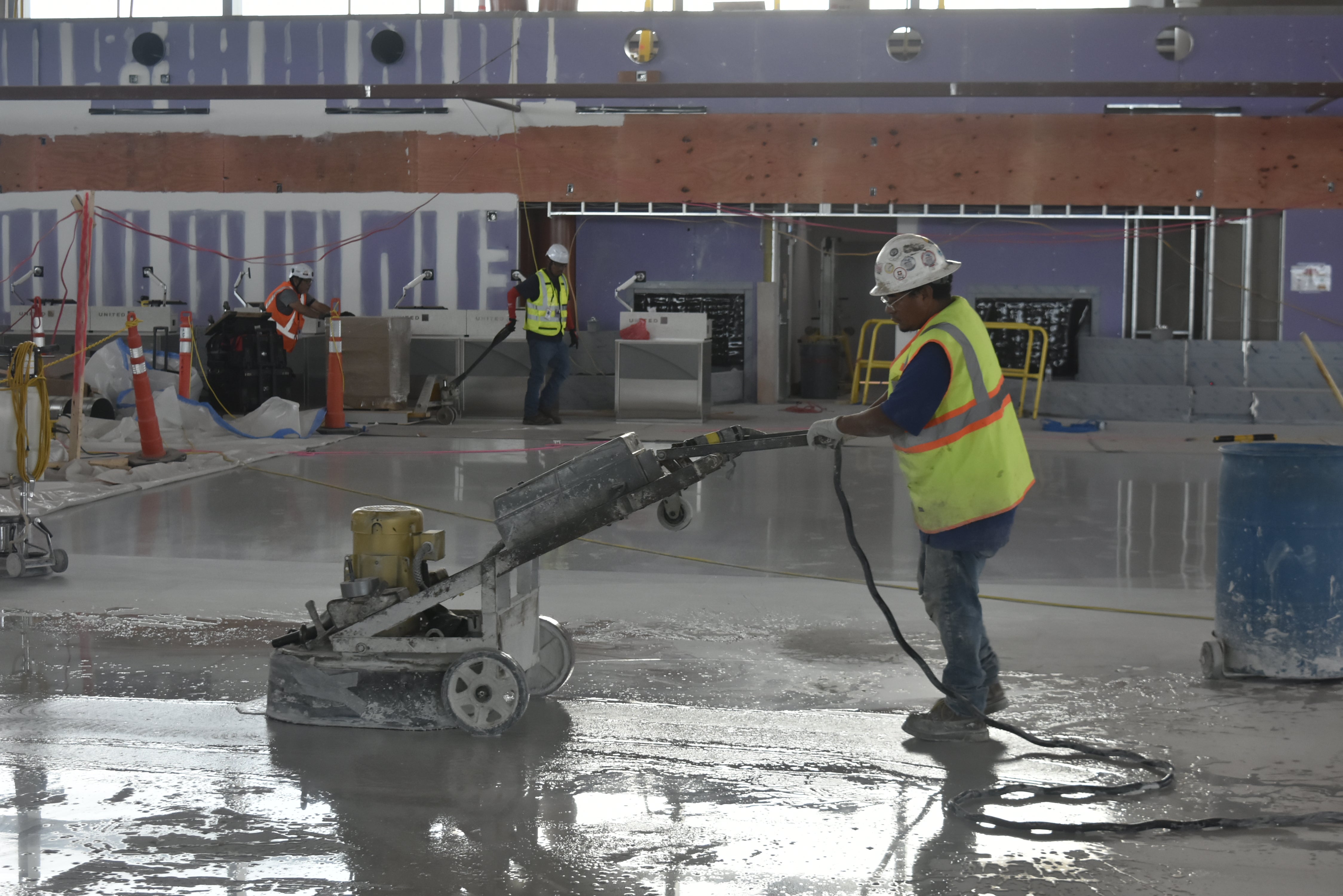
Working at an airport could also mean safety regulations in addition to the safety concerns all BAC signatories prioritize. For DeRiggi's precast team, working on the massive parking garage next to the terminal, "if there was too much fog for them to fly, our crane was shut down, we weren’t allowed to move."
That had knock-on effects: "You've got 10 trucks coming from Ohio with precast on them and you're not allowed to set it. So there's a scramble, you're trying to move them around, you're trying to find space for parts and pieces."
"It's a big logistical nightmare sometimes," he added, "but it really worked out."
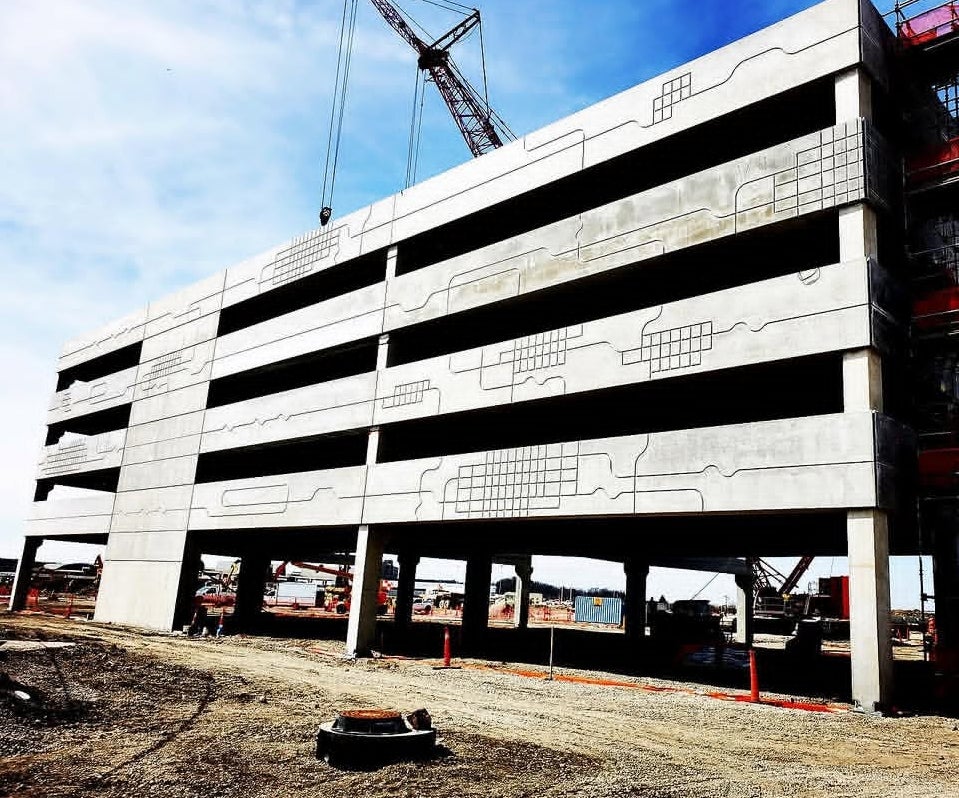
The size of the job raised the stakes of every delay. DeRiggi, a BAC member for more than 10 years, called it "the biggest project I've been on."
"A normal size parking garage is maybe 300 to 400 pieces,” DeRiggi explained. “This project was over 3,000. So, the scale and the scope meant that we actually set the precast with the crane for 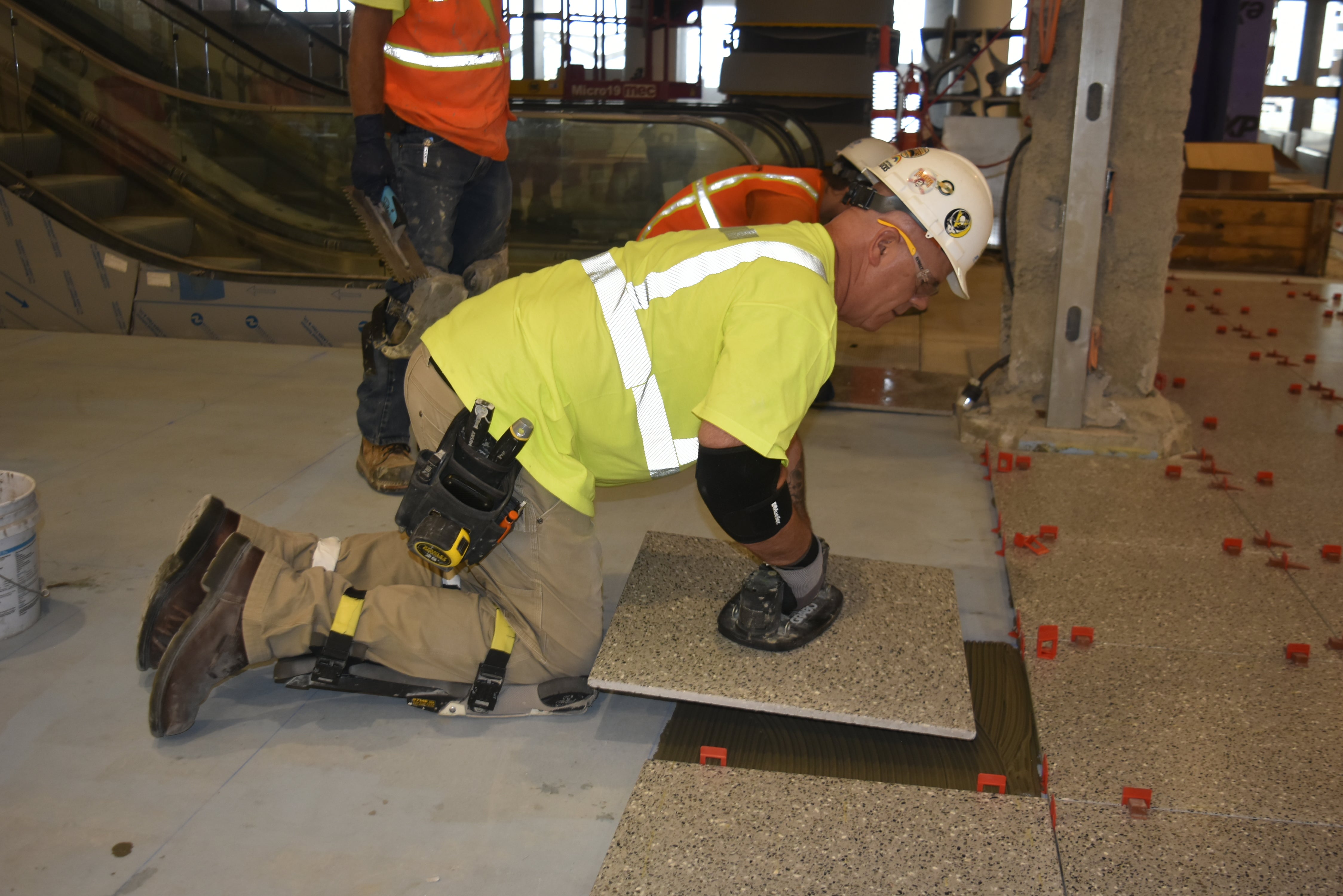 13 straight months, whereas a normal 300 to 400 piece parking garage, we set it in two months."
DeRiggi emphasized how his team's skill and work ethic paid off. Precast, he said, "doesn't go bad a lot, but if it does go bad, you're dead right now. It's pretty serious work." Working with an experienced crew meant, "You have a meeting with them in the morning, come up with a game plan, and then you don't have to follow them around, you don't have to babysit. They do their job, and they do it well."
 Dennis Chiedor's tile crew also worked on the parking garage, and Chiedor likewise describes it as "one of the bigger porcelain panel jobs" he has worked on.
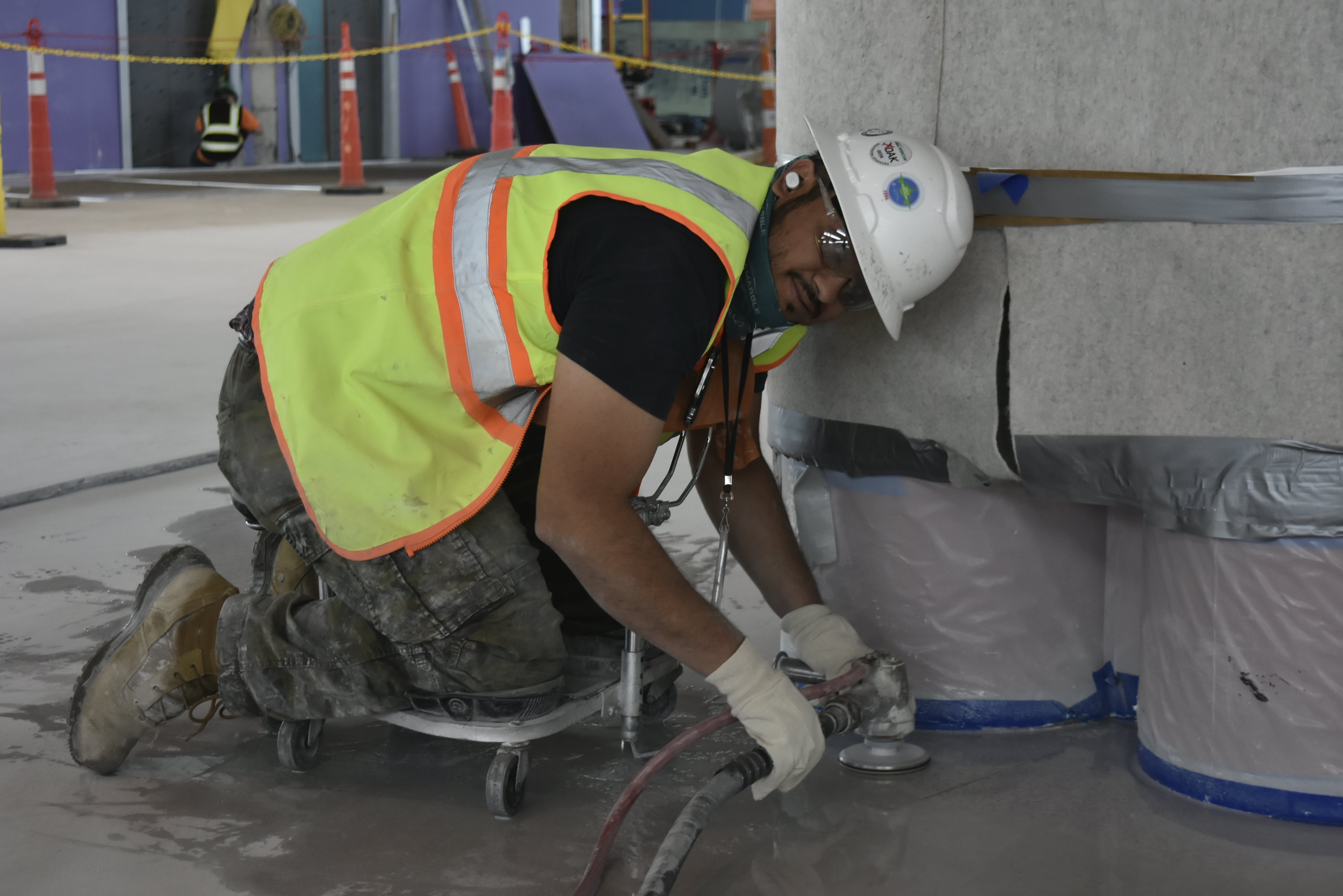
"The stairwell and all the elevator lobbies consisted of three and a half foot by 10-foot porcelain panels, so starting from the ground floor up, we had to run the panel, I believe it was 96 feet high," he said. "We went straight up through the stairwell and as we got to every floor, we had to tie into the elevator lobbies and wrap all the elevator lobbies with the porcelain."
"We had to figure out and lay out the panels and cut them so that every layer of panels hit the different stories or floors at a certain height,” Chiedor continued. “They wanted a three-foot, three-inch wainscot going throughout all the elevator lobbies, but they wanted our panels to come up and hit that. Plus cutting around all the stairwells that are installed." Meanwhile, the stairwells "in some spots are only four inches away from the wall, and we have a 10-foot panel that we have to fasten to the wall."
In the end, Chiedor was incredibly proud of the result, and his team’s work to execute it. "It's impressive how many of the panels went up through the stairwells, and how many and how high it was,” he said. “When you're done and you can stand back and look and the panels go down five stories below you, it's pretty awesome."
 "Everyone I know that's going through the airport I tell them which way to go so they can see which parts I did,” Chiedor concluded, with a sentiment all BAC members know well.
Todd Petrusky, who led a crew of around a dozen bricklayers and stone masons, said "coordination was the big challenge."
"Making sure everything was in place for us to be able to work was the biggest challenge,” he explained. “When I pulled up on that job the first day I was blown away. But my project manager, who's probably been in the union for 15 years longer than I have, said, just break it down into sections. And once I did that, it was fairly self-explanatory."
Over a period of two years, "we built a lot of stair shafts, did all the masonry veneer, plus pavers, granite panels. We put in ground face block in the parking garage. There was also a lot of restoration work." Even months after the terminal's November opening, stone masons were still working on outdoor patios and landscaping features.
Like Chiedor, Petrusky expressed pride at his role in building the airport terminal. "It's the airport. Tons of people go to it. I can't wait to go to it the first time. I know 90% of my work has been buried, but I know where it is, and I still walk with pride."
And as Local 9 President Ringer said, that sentiment extends to all of Local 9 – and beyond. “The work on this airport is something our local can be proud of. And it’s an airport that Pittsburgh can be proud of.”
Members in Action Profile: Kennedy Benjamin
For 15 years now, Kennedy Benjamin has enjoyed working as a union terrazzo mechanic –
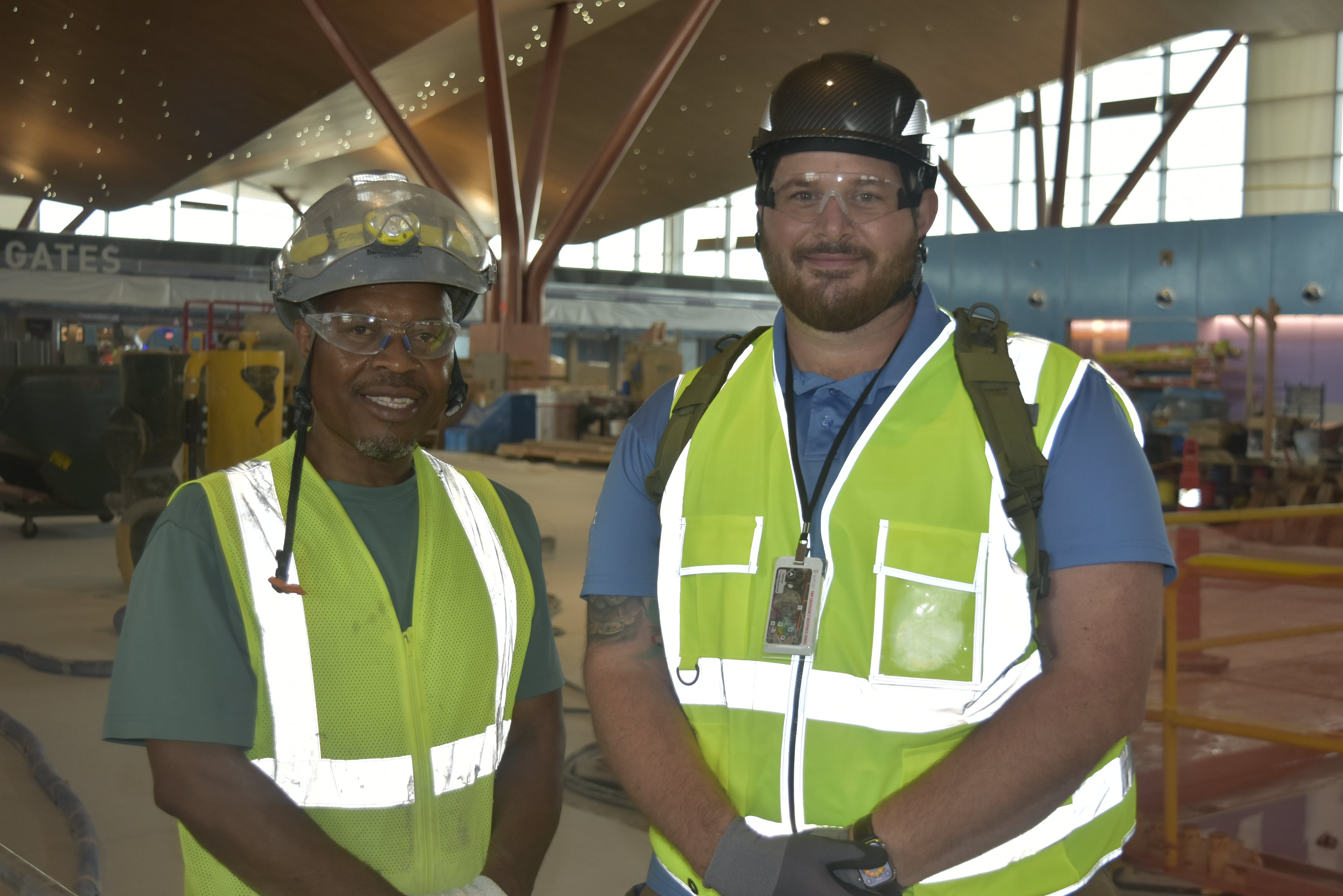
because he knows what it’s like to work non-union. “I wish I began my career in the BAC. I started non-union, and did not have access to the kind of benefits I have with the union,” said Brother Kennedy. “The financial stability that I have now is amazing.”
Benjamin immigrated to the United States in 1991, and moved to Pittsburgh in 2010. That’s when he joined Local 9 PA. “Coming from Dominica, I was worried I wouldn’t get to meet many people here,” shared Benjamin. “Once I joined the union, it was like being welcomed into a family. My best friends are here in the union, and the friendships are life changing.”
Not only has Benjamin been able to meet incredible brothers and sisters while in the BAC, he’s also been able to begin investing in his future. “Because of the BAC, I now have financial stability,” explained Benjamin. “When I was working non-union, I couldn’t save money. But with the union wages, I am finally able to have financial stability!”